

Welcome to the EMU History Section!
We are here to help you. Our office is open to walk-in visitors Monday through Thursday, 9am to 5pm. You can also reach us by phone or email. Please call us at 487-1018, 9am to 5pm, Monday to Friday. If we are unable to take your call, please leave a message and we’ll get back to you soon. Find the email addresses of Advisors on our Advising page, and find the addresses of Professors, Secretary, and Department Head on our Contact page.
Why Study History?
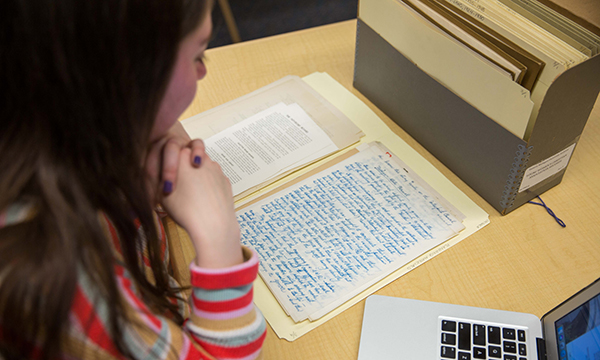
Through the study of history, you can gain an understanding of the past as well as several widely transferable skills. By learning to find, evaluate, interpret, and synthesize documentary evidence, students of history develop their abilities to think critically and to express themselves clearly and persuasively. Students of history bring a historical and cross-cultural perspective to discussions of current affairs and can participate in public life as informed, thoughtful, and articulate citizens and leaders.
Diversity and Inclusion
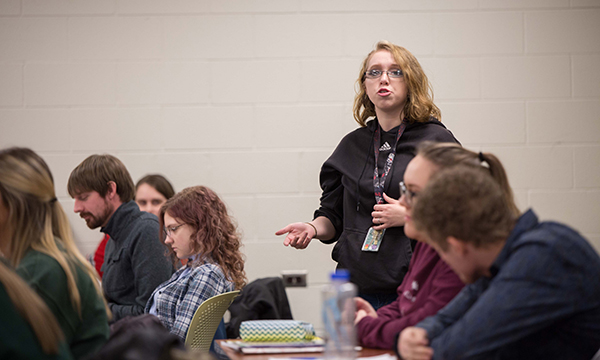
The History Section at Eastern Michigan University aspires to cultivate an inclusive learning environment. We understand diversity in its broadest terms to include gender identity, race, class, ethnicity, religion, ability, sexuality, and other categories of belonging. As historians, we examine how these categories of identity intersect and travel across cultures and centuries. Our classrooms, internships, research projects, and Speakers Series are all sites where we examine these processes through a historical lens, and aim to be inclusive and welcoming of all people. We strive to attract students who represent the full spectrum of the cultures and nations as such diversity prepares students to be conscientious citizens of the world. In recent years, we have lost some of our global coverage and believe that restoring our global offerings is a central priority for the History Section. We are also working to recruit and retain diverse and underrepresented minorities in both our undergraduate and graduate programs. We vow to promptly address all forms of harassment as well as the perpetuation of stereotypes, misconceptions, and injustices.

News
- Office: 701 Pray Harrold, Ypsilanti, MI 48197
- Call: 734.487.1018